
June–August
Warm, long daylight hours
High crowds
Peak season provides maximum daylight for coastal exploration.
Eight kilometres of sheer cliff face rising 214 metres above the Atlantic, where seabirds nest and medieval towers watch the western horizon.
Explore AttractionsOn clear days, the Cliffs of Moher reveal a 270-degree panorama encompassing the Aran Islands, Galway Bay, and the Twelve Bens mountain range—a sight that has drawn visitors since the 18th century, when gentlemen travellers began recording their awe in published accounts. The cliffs themselves are far older.
Deposited during the Namurian period 320 million years ago, alternating layers of sandstone, siltstone, and shale record ancient river deltas that once flowed into a tropical sea. Differential erosion has carved the strata into horizontal bands visible from sea level, a cross-section of deep time exposed to Atlantic gales.
Cliffs of Moher Tickets provide access to both the natural monument and the interpretive infrastructure built to accommodate modern visitation. The underground Atlantic Edge exhibition uses video, sound, and geological samples to contextualize what visitors see on the clifftops—why puffins nest in the shale, how stack formations develop, what forces shaped this western margin of Europe. Above ground, paved pathways accommodate wheelchairs and pushchairs as far as O'Brien's Tower, the castellated stone structure Cornelius O'Brien commissioned in 1835 to enhance the cliffs' appeal to tourists. Beyond the tower, trails narrow and surfaces become uneven, rewarding those who continue with quieter vantage points and closer proximity to nesting seabirds.
The site anchors several regional itineraries. Private Tours & Luxury Cliffs of Moher Tours offer dedicated transport and expert commentary. Boat Tours & Cruises approach the cliffs from below, revealing cave systems and the true verticality obscured from above. Day Tours from Dublin make the cliffs accessible as a long day trip, while Tours from Galway reduce transfer time to under ninety minutes. Combo Tours with the Aran Islands pair the cliffs with ferry crossings to Inisheer or Inishmore, linking two of the Wild Atlantic Way's signature experiences.
The cliffs suit those who value geological spectacle and are prepared for exposure to wind and weather. Handrails and warning signs mark the clifftop edge, but responsibility rests with visitors. Fog can descend without notice, reducing visibility to metres. In these conditions, the cliffs lose none of their power—the sound of unseen waves, the cry of gulls, the knowledge of the drop remain. Advance Cliffs of Moher tickets ensure entry during high season and streamline access to the visitor facilities that frame, but do not diminish, the elemental encounter Ireland's Atlantic edge provides.
“Alternating layers of sandstone and shale record ancient river deltas that once flowed into a tropical sea, now exposed as Europe's most dramatic coastal cross-section.”
Europe's highest coastal cliffs, where Namurian shale and sandstone strata plunge directly into the Atlantic surf.
Underground visitor centre interpreting 320 million years of geology, seabird colonies, and maritime folklore through immersive displays.
Stone lookout tower commanding views to the Aran Islands and Twelve Bens, connected by clifftop trails frequented by nesting razorbills.
The Cliffs of Moher rise 214 meters above the Atlantic, stretching eight kilometers along County Clare's coast. Visitors can explore these ancient sea cliffs through guided excursions departing from Dublin and Galway, private luxury experiences, boat perspectives from the water below, or combination tickets linking the cliffs with the nearby Aran Islands. Each option reveals different angles of this geological landmark.
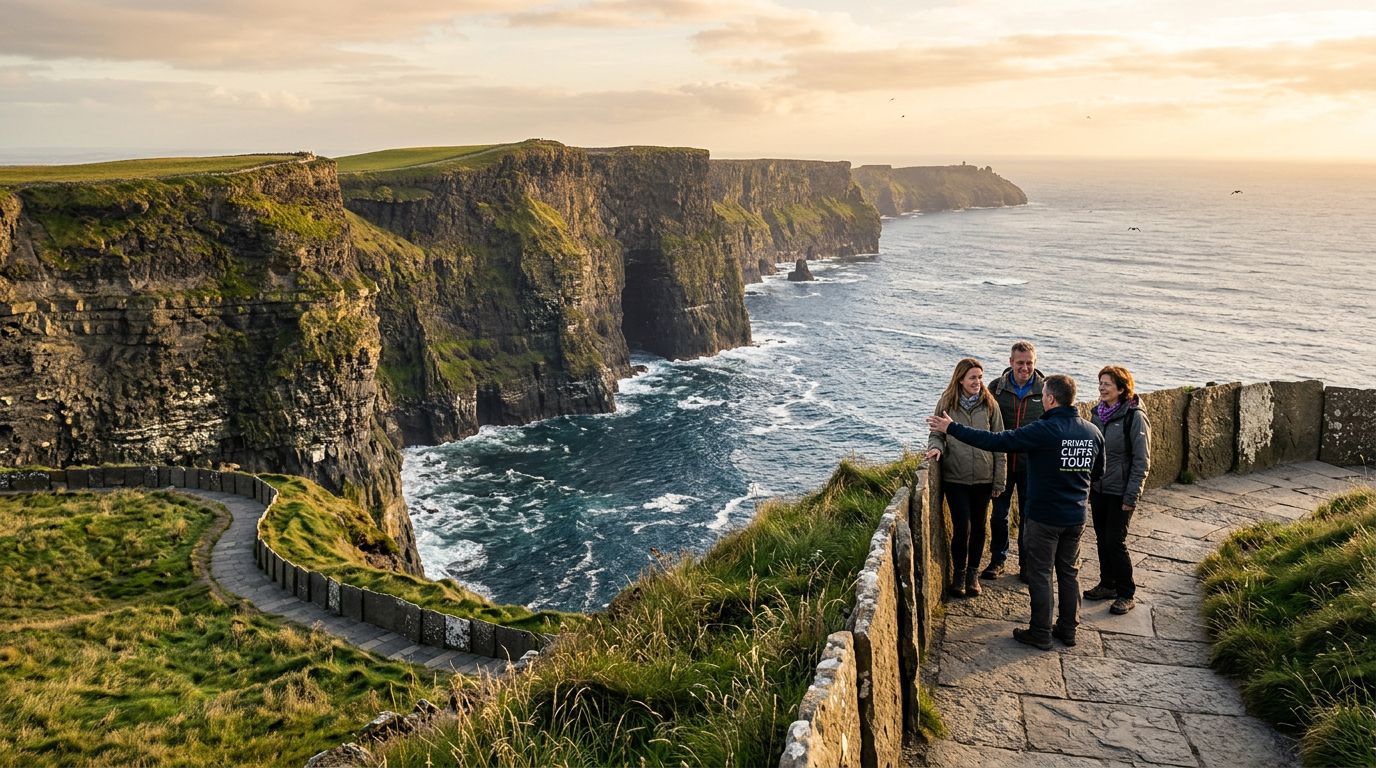 Private Tour
Tailored experiences with dedicated guides, flexible schedules, and small-group or solo arrangements. You control the pace, skip shared coach stops, and access insider commentary on geology and local history.
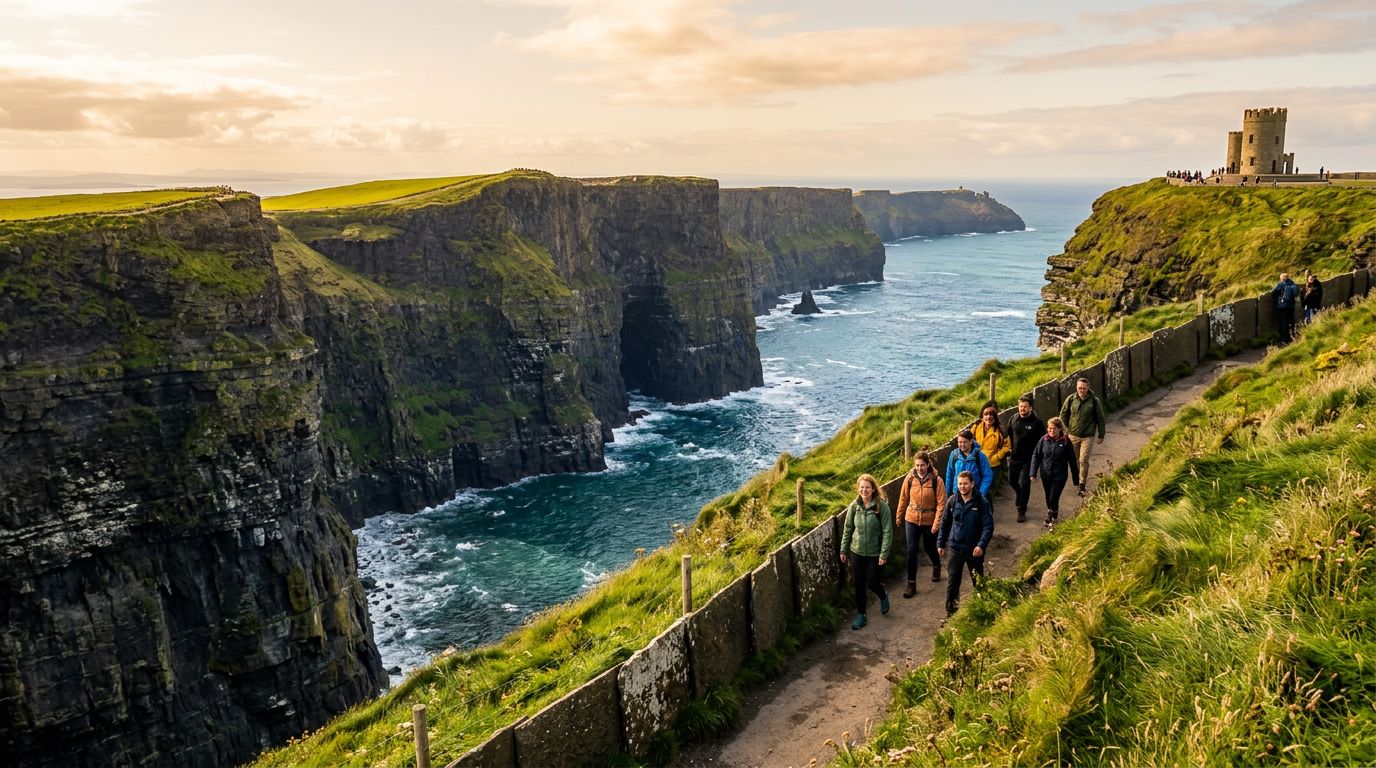 Day Tour
Shorter transfers from Galway city—under 90 minutes each way—allow more cliff-side time. Coaches handle the coastal roads while guides narrate Clare's geography and folklore.
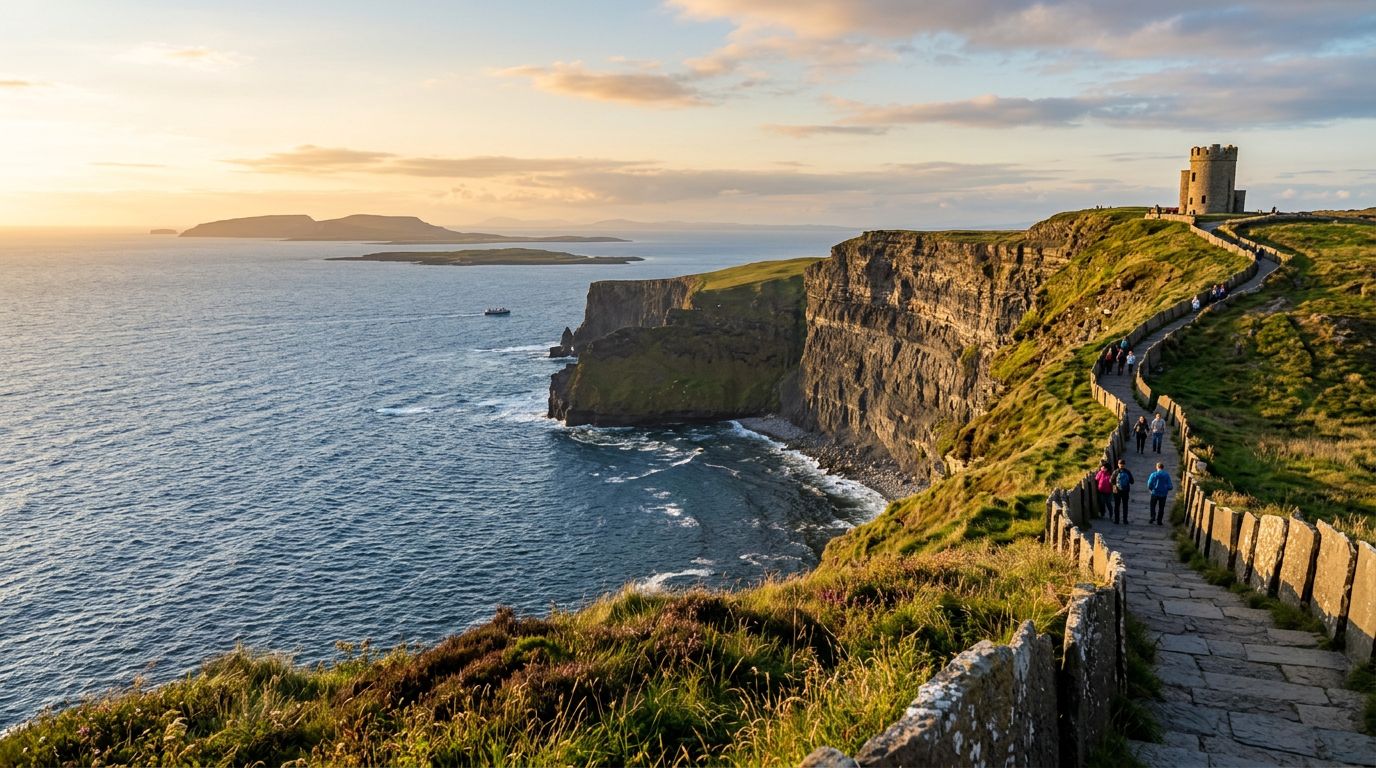 Combo Tour
Paired itineraries linking the cliffs with ferry crossings to Inisheer or Inis Mór, where stone forts and traditional villages offer a second Atlantic perspective in one outing.
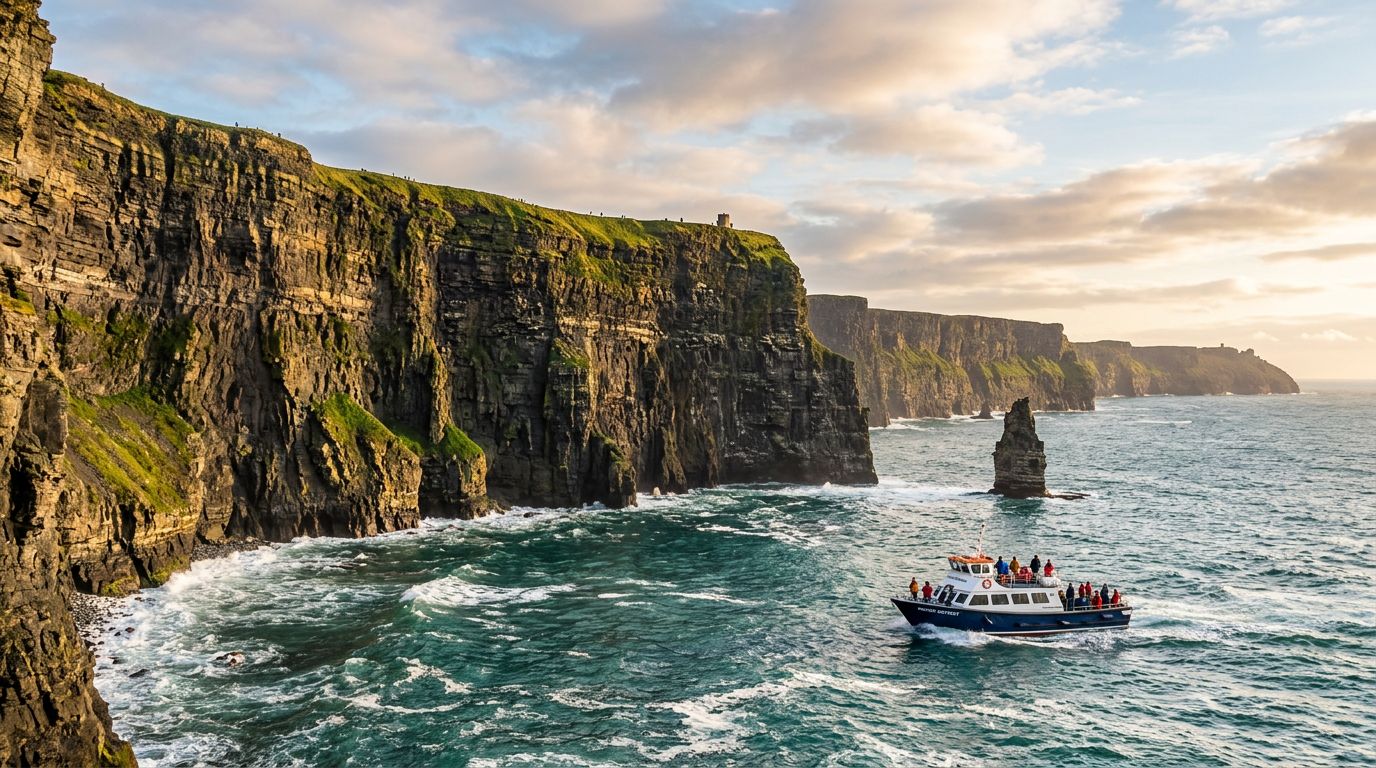 Boat Tour
View the cliff faces from sea level, where wave-cut caves, seabird colonies, and rock strata become visible. Departures run from Doolin harbor when Atlantic conditions permit safe passage.
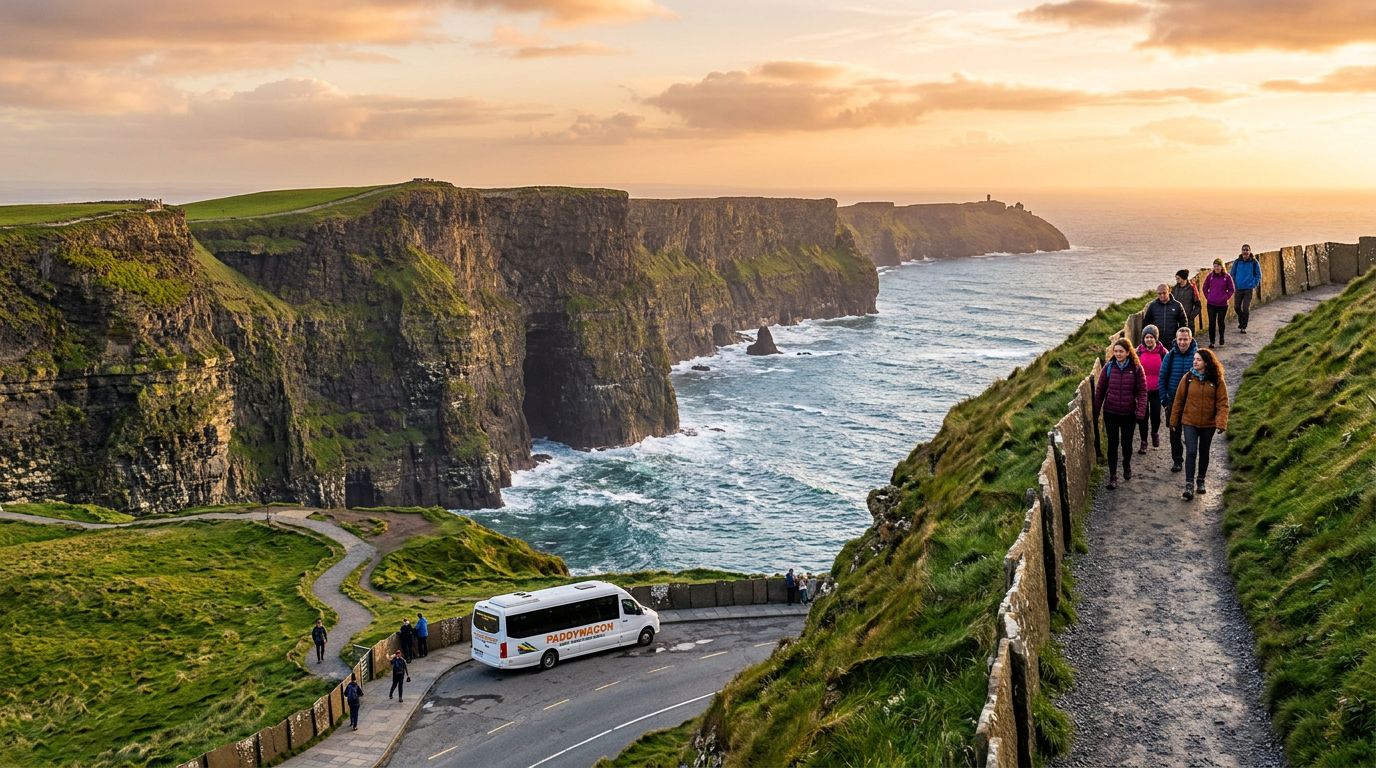 Day Tour
Full-day coach trips covering the 270-kilometer route from the capital, typically including stops at the Burren limestone landscape and Galway city before reaching the cliff viewpoints.
The Cliffs of Moher work best as part of a broader Wild Atlantic Way itinerary rather than a standalone stop. Most visitors arrive via organized tours from Dublin or Galway, which bundle transport, admission, and often coastal or island extensions. Below are two flexible frameworks—one for day-trippers, one for those combining the cliffs with Aran Islands or boat perspectives.
Board a coach tour from Dublin city center; journey takes roughly 3.5 hours with comfort stops and commentary along the N18. Most operators include O'Brien's Tower admission.
View guideSpend 2–3 hours walking the clifftop trails from Hag's Head north to O'Brien's Tower; use the interactive exhibits to understand geology and seabird colonies.
Take a one-hour cruise departing Doolin Pier for sea-level views of the 214-metre rock faces; departure times depend on tide and swell.
View guideMost Dublin tours route back through Galway, allowing a 30-minute stop on Quay Street for an early dinner before the final leg.
View guideCatch the morning ferry from Doolin or Rossaveal; combo tickets include cliff admission the previous day and island transport.
View guideCycle or take a pony trap to Dún Aonghasa fort on Inishmóre, or visit the shipwreck and lighthouse on Inisheer; allow 4–5 hours ashore.
Evening ferries land back on the mainland by 18:00; stay in Galway to avoid the long drive to Dublin after dark.
The Cliffs of Moher are located in a rural area, making guided tours the most common method of arrival for visitors. While independent travel is possible, public transit services are limited in frequency.
Operated by Bus Éireann and TFI Local Link, services connect nearby towns like Ennis and Galway to the visitor center. Check the TFI Live app for real-time schedule information.
Taxis provide direct access to the site from local hubs and are available for private hire. Rates for local travel generally align with standard regional pricing.
From the airport: Travelers arriving at SNN|Shannon Airport can reach the cliffs via bus or taxi. The journey takes 1 hr, with taxi fares ranging from €110–150.
The peak season of June–August offers the longest daylight hours and warmest weather, making it the primary window for planning a visit. Visitors seeking to balance visibility with fewer people often find success in the shoulder months.
Peak season provides maximum daylight for coastal exploration.
Fewer crowds and stable conditions often persist.
Visibility is often limited by coastal weather.
Improved weather patterns begin before summer peak.
Visiting the Cliffs of Moher requires balancing individual entry fees against the comprehensive pricing of organized tours. Prices remain consistent across the region, though booking in advance via the official site at https://www.cliffsofmoher.ie often provides better value than walk-up rates.
Daily budget: A mid-range daily budget for a traveler visiting the region typically ranges from €200 to €300 per person, depending on accommodation choices and tour selection.
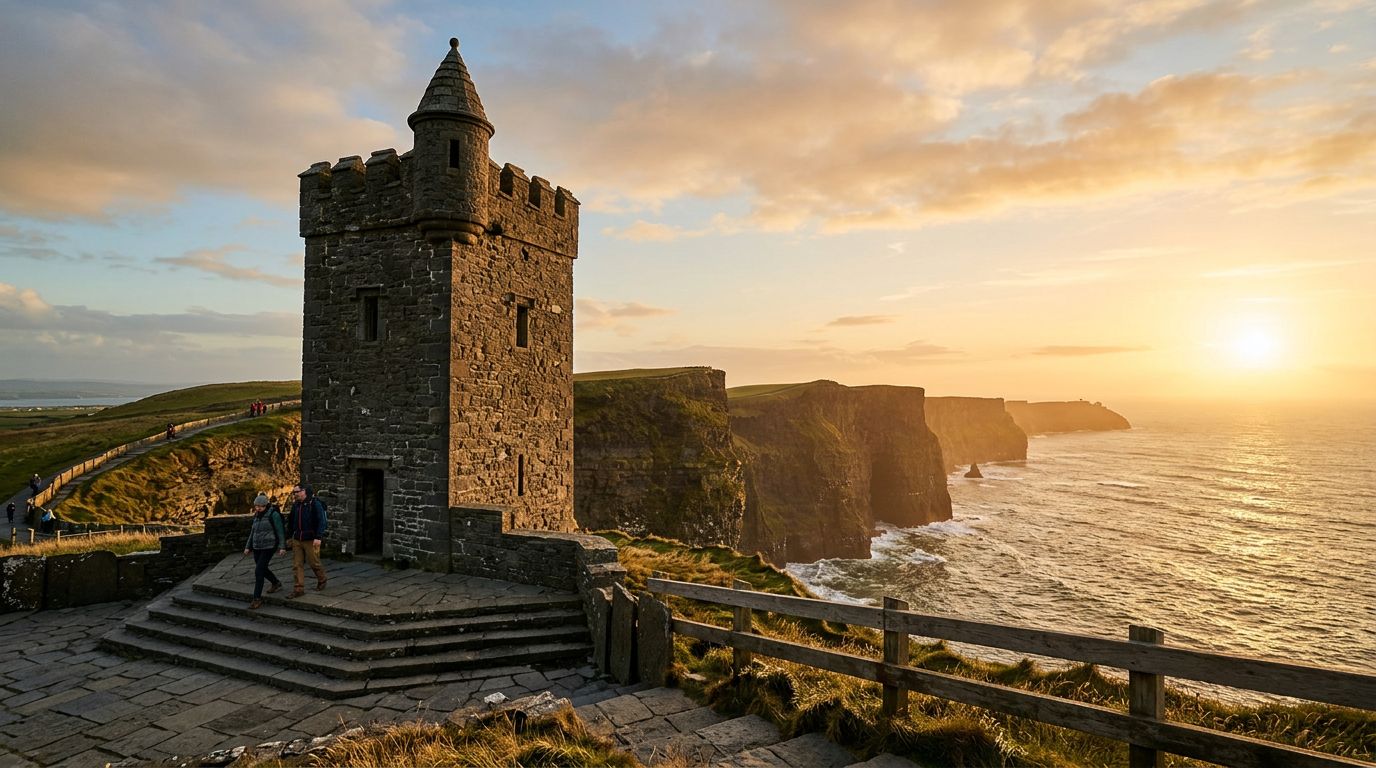
Position your camera at the base of the stone tower for a low-angle shot framing the spire against the cliff edge.
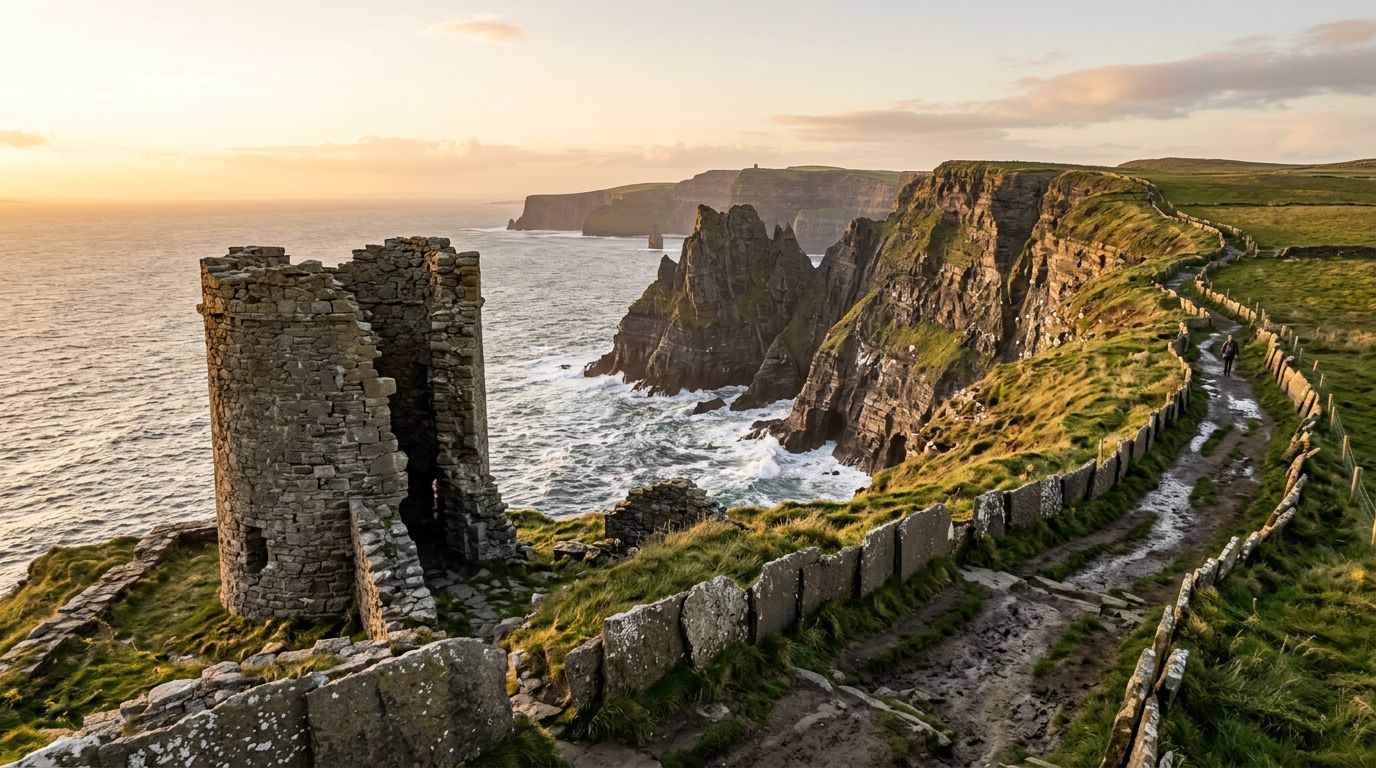
Capture the dramatic jagged rock formation from the southern coastal path, keeping the ruins in the foreground.
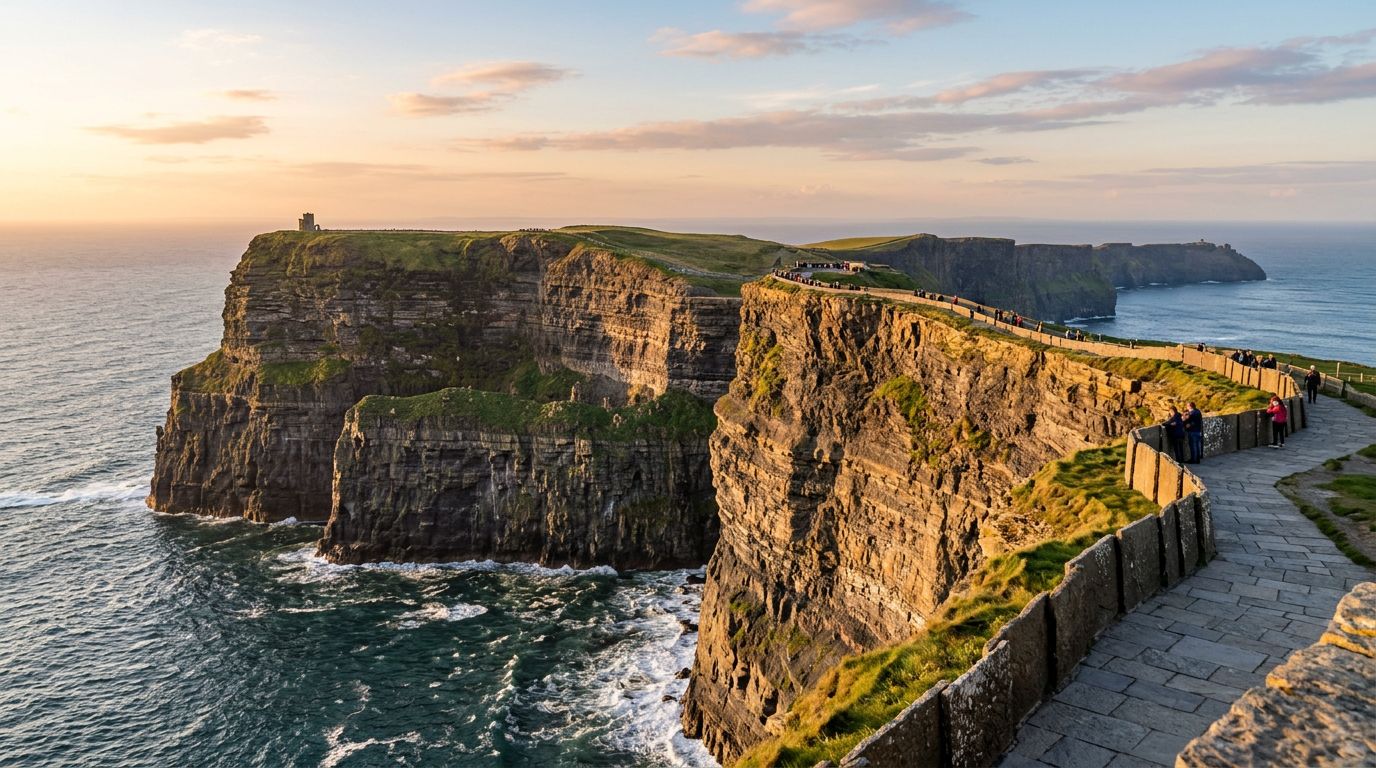
Frame the layered sedimentary rock faces looking north toward the main visitor center area.
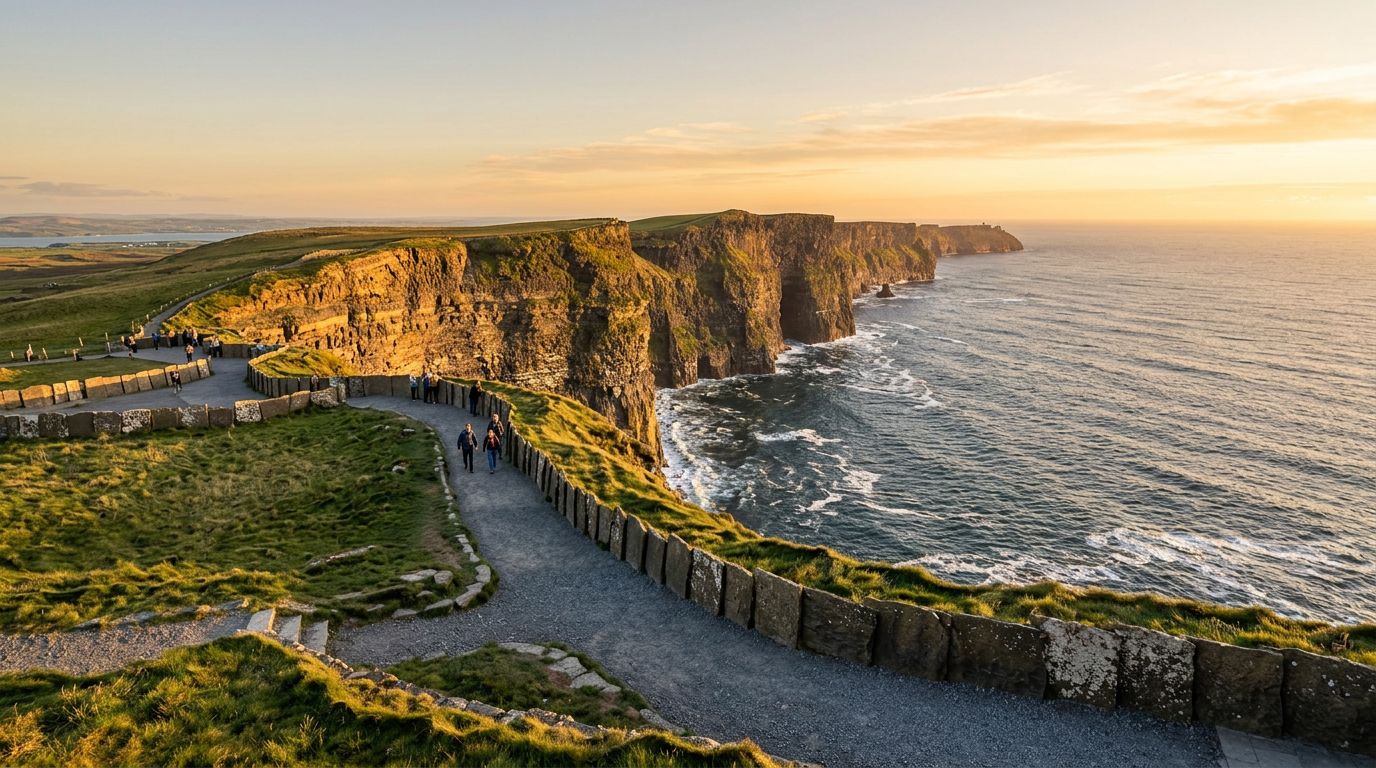
Use a wide-angle lens to capture the vast expanse of the cliffs curving toward the Atlantic Ocean.
The area features the dramatic cliff edge pathways, the eco-friendly Visitor Centre experience, the historic O'Brien's Tower, and boat cruises that offer views from sea level.
If you prefer history and panoramic views, visit O'Brien's Tower and the main platforms. Hikers should explore the Coastal Walk, while nature lovers will enjoy the seabird colonies visible from the boat cruises.
The best time to visit is early morning before 11:00 AM or late afternoon after 4:00 PM to avoid peak crowds. Sunset offers spectacular lighting for photography.
Yes, booking online in advance is highly recommended to secure the best rates and guarantee entry, especially during the busy summer months.
The Visitor Centre and main viewing platforms are wheelchair accessible and family-friendly with safety walls. However, the coastal hiking trails outside the main area can be uneven and steep.
The main site is walkable. To explore further along the coast, a shuttle bus service connects the Cliffs with the nearby villages of Doolin and Liscannor during the tourist season.
You can find combination tickets that include entry to the Visitor Centre, O'Brien's Tower, and a ferry cruise. Many day tours also combine the Cliffs with the Burren or Aran Islands.
To beat the crowds, arrive as early as possible or plan an evening visit. Walking towards Hag's Head usually offers a quieter experience than the area immediately around the Visitor Centre.
Choose from amazing attractions and create unforgettable memories in this beautiful city
Book Your Experience Now